

A traumatic brain injury can change everything in an instant — your ability to work, to think clearly, to remember, to be yourself. Unlike a broken bone that heals in weeks, a brain injury can affect every part of your life for months, years, or permanently.
If you or someone you love suffered a TBI due to another person’s negligence, Leon Law, PLLC can help. Attorney Jose Leon has over 14 years of experience representing seriously injured people across Phoenix and Maricopa County, and he understands the unique challenges TBI cases present. Every case is handled on a contingency fee basis — you pay nothing unless we win.
Call (480) 269-1083 today for a free case review, or submit your information through our free case review form.
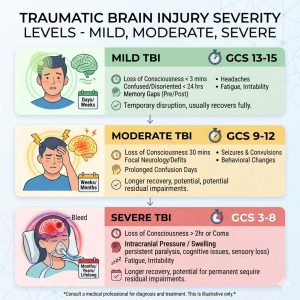 A traumatic brain injury (TBI) occurs when a sudden blow, jolt, or penetrating force to the head disrupts normal brain function. TBIs range widely in severity:
According to the CDC, there were approximately 214,110 TBI-related hospitalizations in the U.S. in 2020 and 69,473 TBI-related deaths in 2021 — more than 190 TBI-related deaths per day. An estimated 5.3 million Americans currently live with a TBI-related disability.
What makes TBI so devastating is that it can affect virtually every aspect of a person’s life:
These effects ripple outward, placing enormous stress on spouses, children, parents, and caregivers.
Traumatic brain injuries result from many types of accidents. The most common causes in the Phoenix area include:
TBI symptoms do not always appear immediately. Some develop hours, days, or even weeks after the initial injury. If you or a loved one experienced a blow to the head, watch for:
Immediate symptoms: loss of consciousness (even briefly), confusion, headache, nausea or vomiting, dizziness, blurred vision, and ringing in the ears.
Delayed symptoms (hours to weeks later): persistent or worsening headaches, memory problems, difficulty concentrating, mood changes (irritability, depression, anxiety), sleep disturbances, sensitivity to light and sound, difficulty finding words, and personality changes noticed by family members.
Seek emergency care immediately if you experience seizures, repeated vomiting, clear fluid draining from the nose or ears, one pupil larger than the other, extreme drowsiness, loss of coordination, or slurred speech.
The delayed nature of many TBI symptoms is one reason these cases are so complex — and so important to document from the very beginning.
Brain injury claims are among the most challenging personal injury cases for several reasons:
TBI victims and their families may be entitled to significant compensation, including:
| Severity | Typical Settlement Range | Key Factors | Specialists Needed |
|---|---|---|---|
| Mild TBI / Concussion | Tens of thousands of dollars | Duration of symptoms, work impact, neuropsych testing | Neuropsychologist, treating physician |
| Moderate TBI | Hundreds of thousands of dollars | Hospitalization duration, cognitive deficits, rehab needs | Neurologist, rehab specialist, vocational expert |
| Severe TBI | Potentially several million dollars | Permanent disability, lifetime care, lost earning capacity | Full expert team + life-care planner + economist |
| Fatal TBI | Varies — wrongful death claim | Dependents, lost income, loss of companionship | Wrongful death attorney — learn more |
Given the enormous lifetime costs of TBI care, any settlement or verdict must account for future needs — not just current medical bills.
Brain injury cases demand an attorney who understands both the medicine and the law. At Leon Law, PLLC, we:
With 14+ years of experience and a deep understanding of brain injury cases, Jose Leon fights to secure the full, fair compensation TBI victims deserve.
Under A.R.S. § 12-542, you generally have two years from the date of injury to file a TBI lawsuit in Arizona. Because of the discovery rule, the clock may start when the brain injury is diagnosed or reasonably should have been discovered — which matters in cases where symptoms are delayed.
For claims against government entities, you must file a notice of claim within 180 days under A.R.S. § 12-821.01. For children, the statute of limitations is tolled until they turn 18 (A.R.S. § 12-502).
Do not wait. TBI cases require extensive investigation, expert consultation, and thorough medical documentation. The sooner you contact an attorney, the stronger your case will be.
A concussion is a type of mild traumatic brain injury. All concussions are TBIs, but not all TBIs are concussions. A concussion typically involves brief confusion or loss of consciousness and often resolves within weeks, while moderate and severe TBIs can cause lasting cognitive, physical, and emotional impairments. Even a “mild” concussion should be taken seriously, as repeated concussions or complications can lead to long-term problems.
Standard imaging does not always detect mild or moderate TBI. Advanced diagnostic tools — including neuropsychological testing, diffusion tensor imaging (DTI), and functional MRI — can reveal brain damage that conventional scans miss. An experienced brain injury attorney will work with neurologists and other specialists to build the medical evidence your case needs.
There is no single “average” because TBI cases vary enormously. Mild TBI cases may settle for tens of thousands of dollars, while severe TBI cases involving permanent disability, lifelong care, and lost earning capacity can result in settlements or verdicts of several million dollars. The value depends on injury severity, medical costs, lost income, pain and suffering, and the strength of liability evidence. Leon Law evaluates each case individually during a free consultation.
Yes. Delayed symptoms are extremely common with TBI. Arizona’s discovery rule recognizes that the statute of limitations may begin when the injury is discovered or reasonably should have been discovered, rather than the date of the accident itself. However, it is critical to seek medical attention as soon as symptoms appear and to document everything.
If a TBI victim is incapacitated, a legal guardian, conservator, or family member may be appointed to act on their behalf. In fatal TBI cases, Arizona law (A.R.S. § 12-612) allows a spouse, child, parent, or personal representative to file a wrongful death claim.
TBI cases often take longer than other personal injury claims because of the need for extensive medical documentation, expert evaluations, and accurate lifetime cost projections. Some cases settle within several months; complex severe-TBI cases may take one to three years or more. Leon Law never rushes a settlement — we make sure your future needs are fully accounted for before agreeing to any resolution.
Suffered a brain injury in Phoenix? You and your family do not have to face this alone. Attorney Jose Leon and the team at Leon Law, PLLC have the experience, resources, and determination to fight for the compensation you need to move forward. Call (480) 269-1083 today for a free, no-obligation case review — or submit your information through our free case review form. You pay nothing unless we win.

Law is a complicate matter. It can cause you a big problem
if you ignore it. Let us help you!